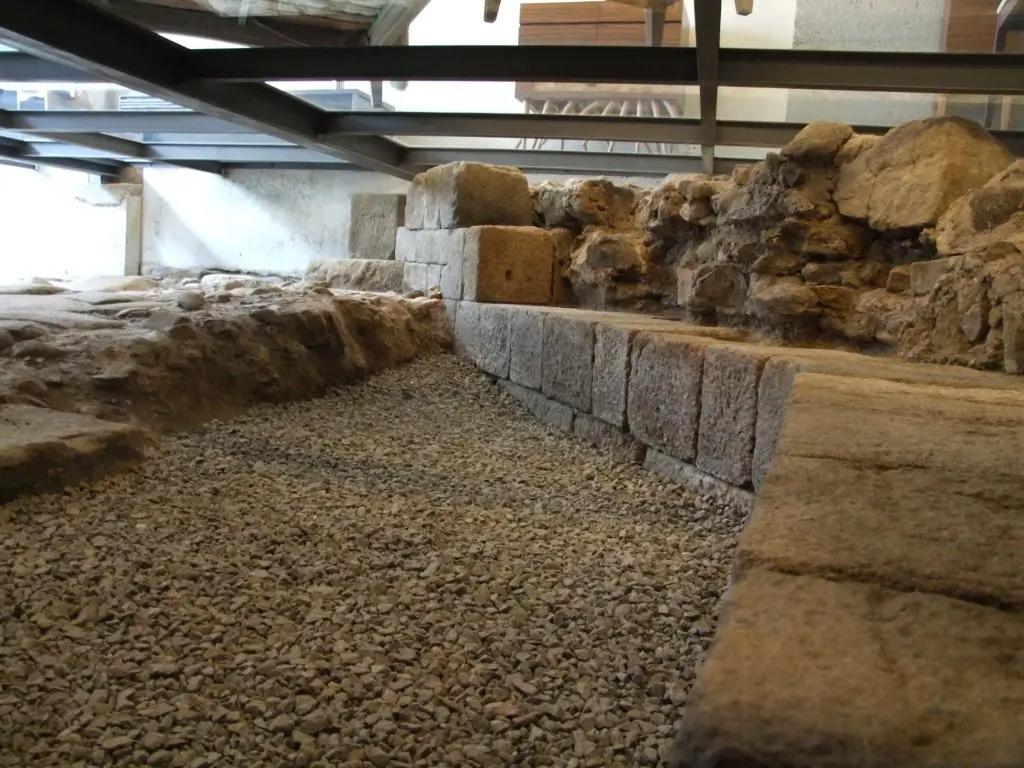
There are visible archaeological structures corresponding to a Roman road and a doorway integrated into the old wall.
See more +
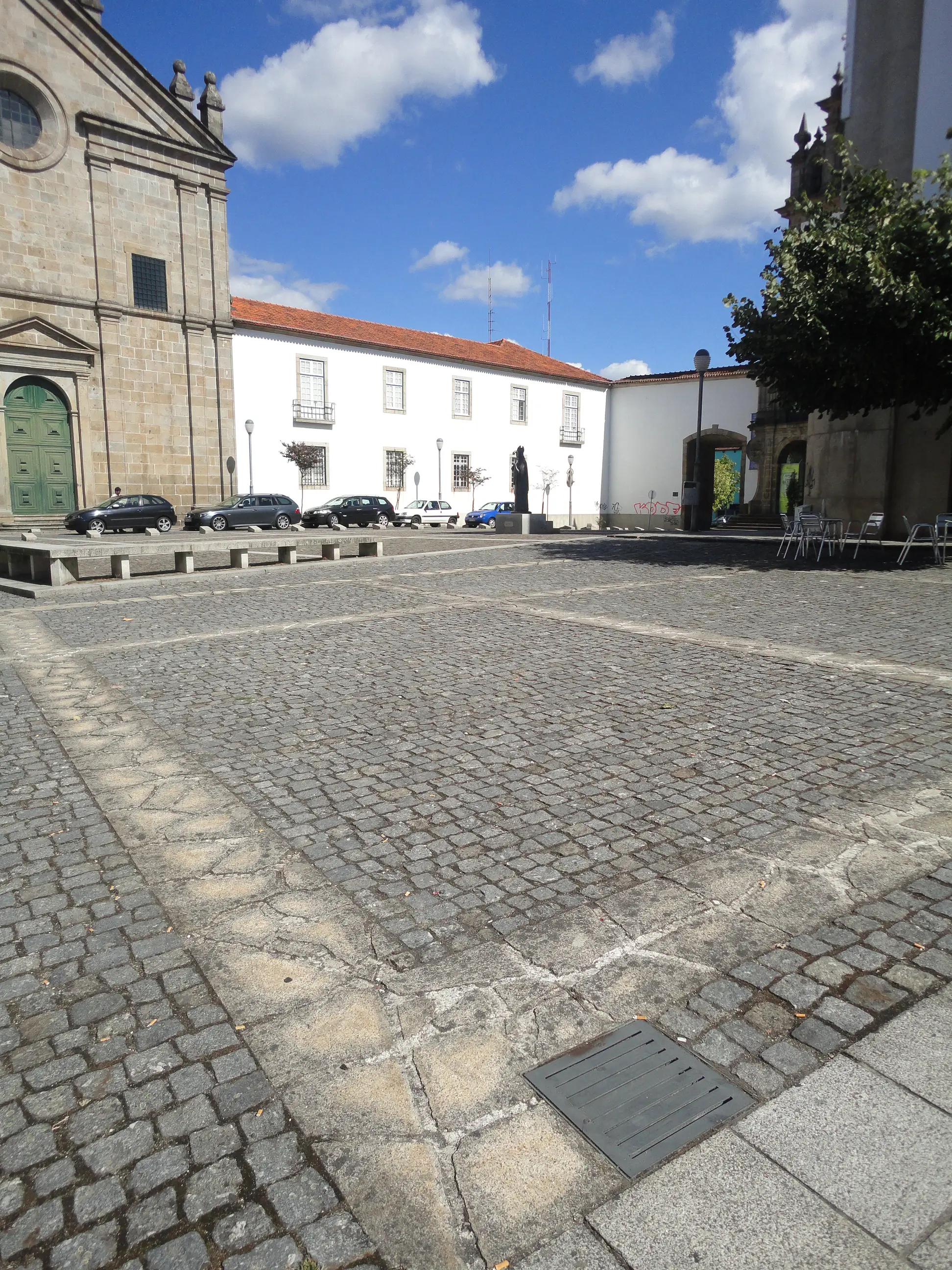
In 1998, when the old sidewalk in Largo de São Paulo was removed, traces of several Roman walls were discovered. Since it wasn't possible to carry out a full archaeological excavation at the site, the University of Minho's Archaeology Unit recorded the walls using drawings and photographs, and decided to mark these structures on the new sidewalk.
The position of the walls within the layout of the Roman city indicates that they were part of a residential block, probably integrating a domus (family dwelling). Their characteristics and the fact that some of the walls extend into the old street suggest that there were two distinct phases of construction.
The oldest walls, dating from between the 1st and 2nd centuries (Phase I), delimited different divisions in the northwest sector of the house, and it is likely that some of these areas functioned as stores with access to a portico. The portico seems to have been built in the 4th century, and the dwelling was extended over the street, possibly in the 5th or 6th centuries (Phase II), thus showing an evolution and expansion of the dwelling.
There are visible archaeological structures corresponding to a Roman road and a doorway integrated into the old wall.
See more +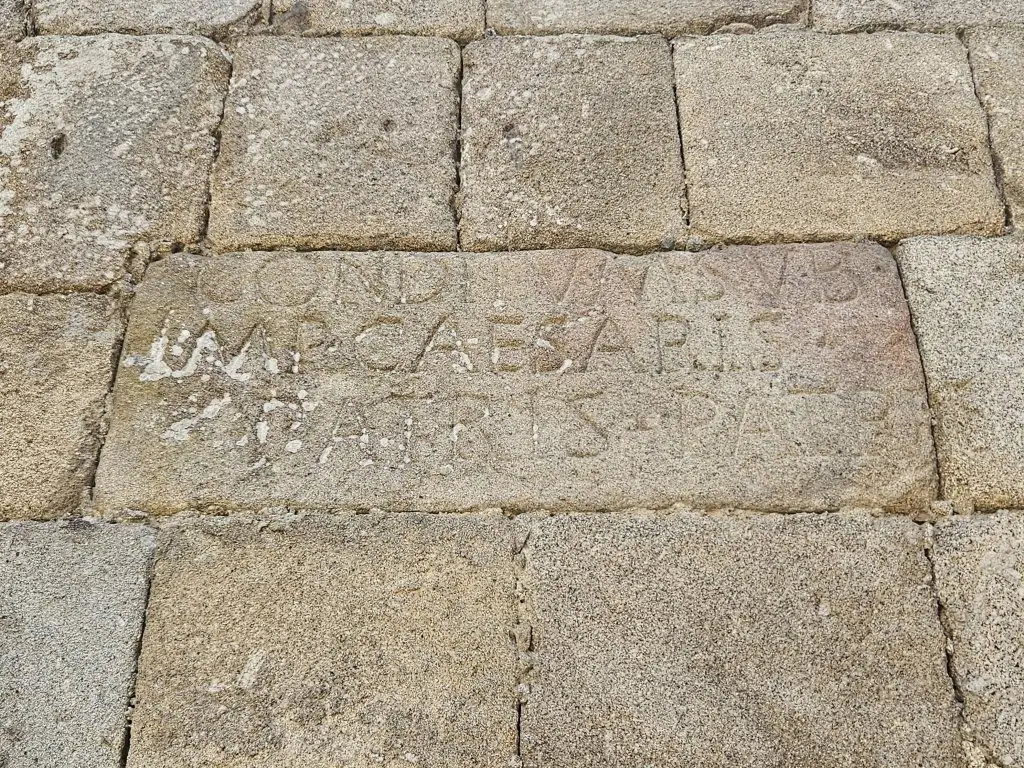
Several scholars suggest that this inscription may correspond to a bidental.
See more +