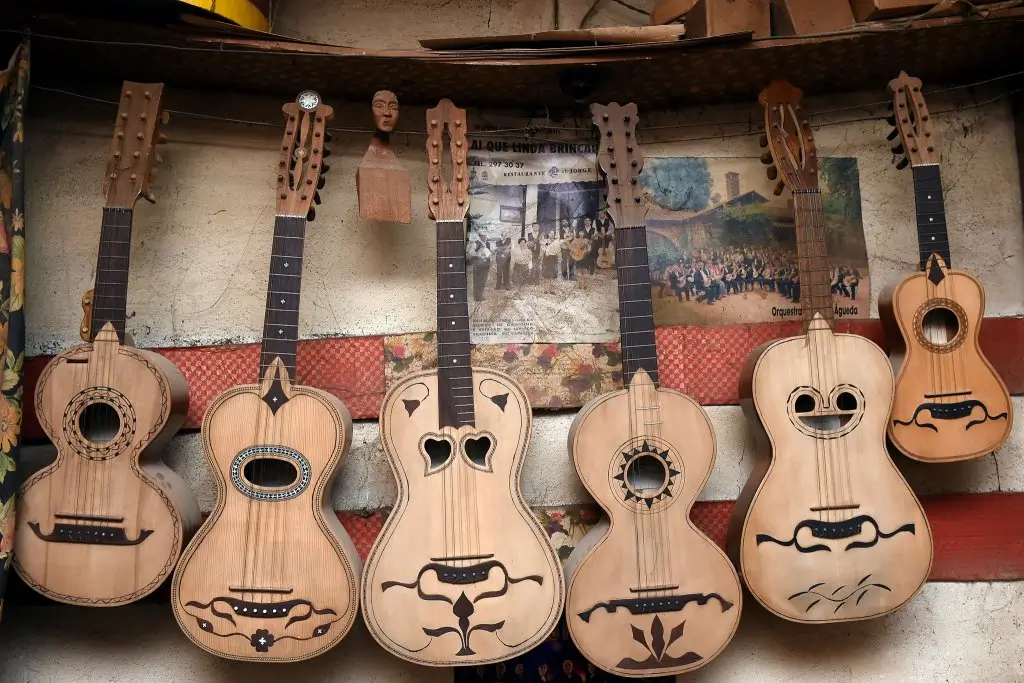
The collection includes string instruments from all over the world, as well as the most characteristic instruments of the region.
See more +
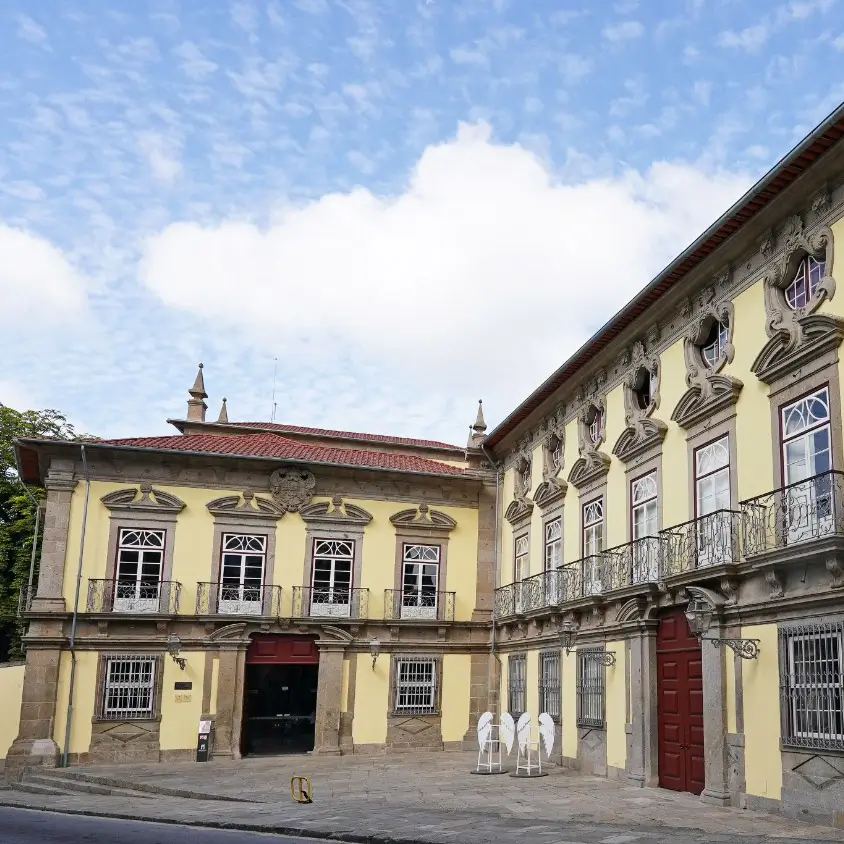
The Biscainhos Palace is a remarkable example of Portuguese residential architecture, located in the city of Braga, and its evolutionary process spans the 17th and 18th centuries, extending into the 19th century, with significant interventions in terms of ornamental interiors, especially tiles, painting and sculpture. This monumental heritage site includes both buildings and gardens, the latter of which highlight 18th century architecture and sculpture, and is representative of the high artistic and cultural level of the northern region.
In the 17th century, the house was owned by Constantino Ribeiro do Lago, a great Braga figure of the time, followed in the next century by his sons, Diogo de Sousa e Silva and the Dean D. Francisco Pereira da Silva, whose descendants were the Counts of Bertiandos. The Palace was acquired by the Braga District Assembly in 1963 and, after significant restoration work, opened to the public as a Museum in 1978.
The building is organized into two distinct levels, which served as the basis for the development of the Museum Program: the first floor, which houses functional spaces such as the Covered Courtyard of Honor, the Stables, the Coach House and the Kitchen; and the Noble Floor, which brings together the apparatus spaces, intended for socializing and performing, including the Monumental Staircase, the Waiting Room, the Great Hall, the Tower Room, the Council of Gods Room, the Music Room, the Tile Room, the Dining Room and the Interior Courtyard-Garden.
In this context, the program is based on making the most of the building itself - its most significant component - which is the ideal setting for presenting collections of art, decorative arts, musical instruments and means of transport, among others.
Tickets can be purchased via Online Ticket Office.
The collection includes string instruments from all over the world, as well as the most characteristic instruments of the region.
See more +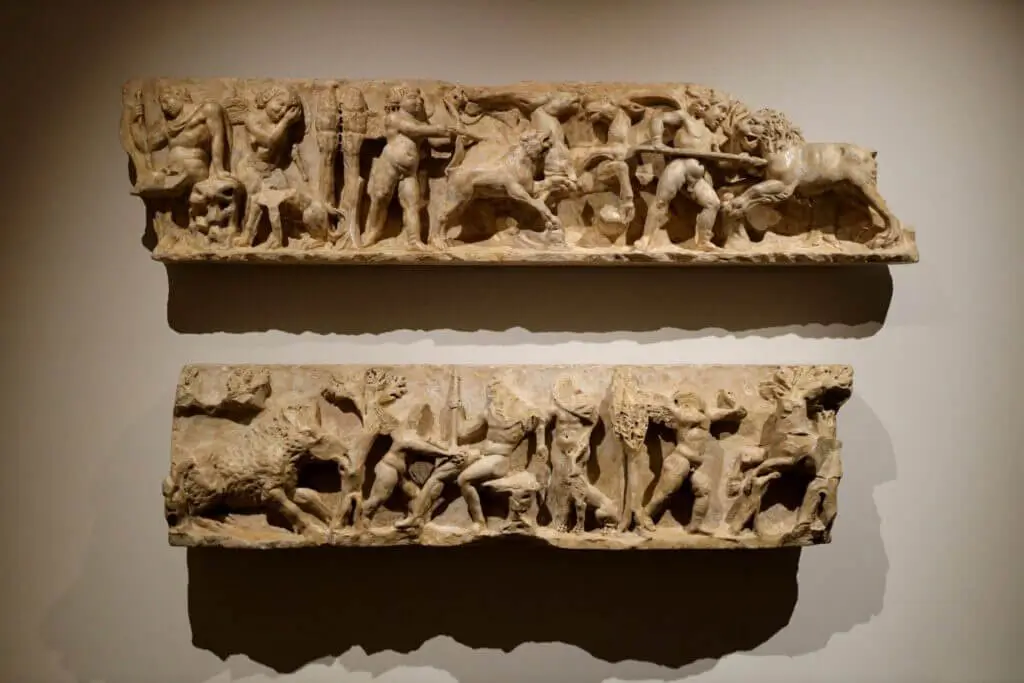
There are around 300 works of Classical Art, including Roman marble sculptures, mosaics and Greek ceramics.
See more +